South Africa cannot achieve sustained economic growth while millions of people remain unconnected. The growing digital divide has shifted from a social challenge to a macroeconomic constraint.
Addressing this is now one of the country’s most consequential economic decisions.
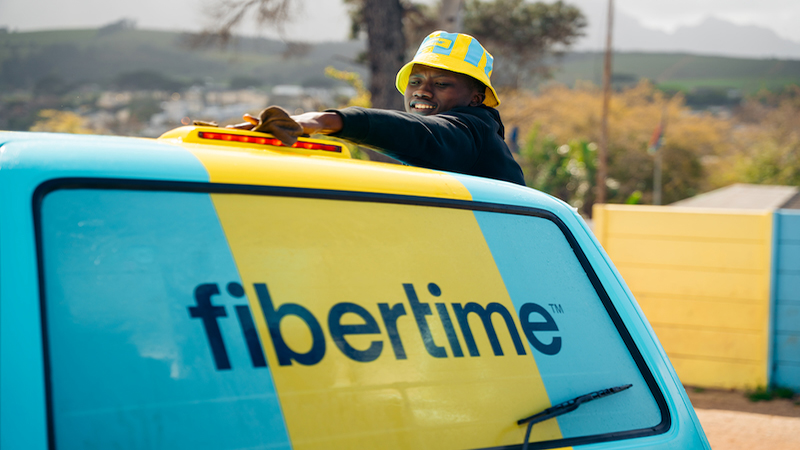
Innovative models like fibertime™, which delivers pay-as-you-go, uncapped fibre internet at R5 per day, are proving that uncapped broadband can reach every home in South Africa. Enabled by Liquid Intelligent Technologies’ carrier-grade fibre backbone spanning over 110,000 km’s across Africa, this partnership is unlocking economic potential at scale.
Connectivity as an economic imperative, not a luxury
Internet access has become indispensable for employment, education, commerce, and service delivery. Nevertheless, affordable connectivity remains inaccessible to numerous residents of South African townships, perpetuating a digital divide that limits opportunities for job seeking, skills development, and entrepreneurship. The lack of adequate internet infrastructure impedes entrepreneurs from effectively competing and restricts access to essential government and financial services for local communities. These constraints inhibit both individual advancement and national economic growth. Broadening reliable and cost-effective internet access holds significant potential to drive innovation and enhance prosperity across the country.
Expensive mobile data compounds this challenge. Furthermore, capped bundles force households to ration their access to the internet resulting in switching off learning, job searches, and business activity long before the month ends. This does not merely reflect inequality, it actively entrenches it.
Uncapped, affordable broadband: A catalyst for inclusive growth
fibertime™ is demonstrating what becomes possible when broadband is priced for the market rather than against it. At R5 per day, with no contracts, no debit orders, and vouchers available at spaza shops and retailers, the company has removed every traditional barrier to access. The model is built for cash-based, highly mobile communities, turning uncapped connectivity from a luxury into a basic economic input, comparable to electricity or transport. When data stops being a luxury, behaviour changes. People move from passive consumption to active economic participation: upskilling, building businesses, accessing markets, and contributing to the formal and informal economy in ways that were not possible before.
An emerging body of evidence shows that affordable, uncapped broadband is one of the most powerful levers for inclusive growth. For South Africa’s township economies, this is a significant and largely untapped opportunity.
AI multiplies the economic impact of digital access
The rise of accessible AI tools amplifies this transformation significantly. With reliable, uncapped internet, AI becomes an always-available guide, tutor, and business advisor. Giving township entrepreneurs capabilities that previously required formal training, capital, or institutional access. For the first time, a spaza shop owner can generate marketing content, build a business plan, and access global pricing information at almost zero cost. A school leaver can acquire in-demand skills without a campus or a bursary. A freelancer can compete in global markets from a township in Soweto or Khayelitsha. The economic multiplier is significant: connectivity unlocks AI, and AI unlocks productivity, entrepreneurship, and skills at scale.
None of this is possible without resilient infrastructure, and Liquid’s fibre backbone has enabled fibertime™ to deliver world-class connectivity at the edge of the network, where it is needed most. This partnership is accelerating digital inclusion and laying the foundation for more productive, connected township economies.
Digital inclusion: A national economic strategy
South Africa can no longer frame digital inclusion as philanthropy or Corporate Social Investment, it is an economic strategy with measurable returns.
By aligning affordable, uncapped connectivity, robust national infrastructure, and accessible AI tools, the country can unlock suppressed productivity, activate the economic potential of township communities and the entrepreneurial ecosystem, thereby aiding the country’s GDP growth. The question is no longer whether we can afford to invest in digital inclusion. The real question is whether we can afford the cost of continued digital exclusion.