Generation Z will play a definitive role in building Africa’s digital economies in the years ahead. Here we speak to a range of businesses, start-ups and academics to find out what new skills they will need to create a successful future.

Ixio Analytics
Megan Yates is Chief Scientist at Ixio Analytics; a South African-based data science company specialising in real-time customer insights, statistics, artificial intelligence, machine learning and advanced mathematical modeling of businesses. Megan founded Ixio in 2012 after seeing a need for strong, data-led modelling and analytics in business, and today leads the advanced modelling programs and coordinates technical requirements for clients.
“We offer advanced data services to businesses across a broad range of industries, including banking, retail, insurance and media.
Our focus is on solving problems with data – and helping businesses to move away from being reactionary to using forecasting and predictive modelling to proactively manage their businesses for more successful outcomes. We use open source tools like R and Python to develop custom built solutions for our customers. We usually create custom built predictive models, and we’re passionate about sharing the code with our clients. We spend a lot of time teaching and coaching our clients so they can carry on the work, and we also help develop coding skills within some bigger organisations.
I have a team of data scientists in Cape Town, South Africa and Accra, Ghana, and we’re slowly expanding our operations across the region. We’re seeing and experiencing a shortage of data science skills across Africa, which we want to help address.
One of the main challenges isn’t around the lack of coding skills, but more the translation into business solving skills. There is a huge gap between hard-core coders and those who can develop a solution that truly works for a business. But progress is being made. There are a number of leading data science courses being run here in Cape Town, while Nairobi is also home to several business schools. Online courses, semester programmes and internships are also hugely important. The African Leadership University in Mauritius and Rwanda, for example, is aiming to train three million African leaders by the year 2066 – with computer science and data science playing a key role.
The next generation are definitely growing up with more confidence in technology and more passion for a job in the digital economy. We’ve had interns work with us that are true digital natives – they have a confidence with data that seems to come naturally to them. They have a great understanding of the digital
world, and they’re very passionate about solving real problems that matter and change lives – not just how to increase profits. And that is certainly a generational shift that we are seeing.
With data science being a relatively new field, it can be hard for students to get hands-on experience. Even if you do a master’s degree in data science, a practical year is essential. Getting involved with the code and the client can really grow a data scientist’s confidence and skillset. By 2050 around 2.2 billion people could be added to the global population and more than half of that growth will occur in Africa. This will put enormous pressure on resources such as water and electricity. In the future, as the supply of these finite resources becomes critical, data science will play an extremely important role in business and society.”

insight2impact (i2i)
Nkosi Ncube is Head of Application Lab at insight2impact (i2i), which aims to increase the use of client -centric and alternative data and research by financial service providers in the development of products and services for financially underserved individuals. He oversees the DataHack for Financial Inclusion (DataHack4FI) innovation competition, an initiative by i2i that brings together some of the brightest and most innovative minds from across the continent to harness the power of data science to develop new evidence-based solutions to improve financial inclusion. Last October, i2i partnered with Liquid Intelligent Technologies, which is providing free high-speed internet access to start-ups entering the 2018 edition of the DataHack4FI innovation competition.
“The aim of i2i is to discover new ways to use data science for financial inclusion, but we realised early on that there was a lack of data science skills in the region.
We wanted to try to encourage young people to get into data science so we set up the DataHack 4FI competition.
The first market we launched in was Rwanda. On the first day of the competition, there were so many young people in the room. Many had come from high schools and set-up their own teams. They didn’t know much about financial inclusion, but they were attracted to the competition because they want to be part of technology and innovation.
This meant many of them arrived with a passion and understanding for coding, but did not understand the business side. Thankfully, they were willing to learn.
Since then, we’ve seen teenagers arriving to our competitions in our six focus countries with coding and/or mathematical and statistics skills. Some of them are studying maths or computer science at college, but many of them are self-taught and have a real passion for sharing information.
My generation had to go out and actively learn ICT skills, but technology is second nature to this new generation.
When it comes to data science, however, coding alone isn’t enough. For them to be fully fledged data scientists they need to have business flair, and that’s what we’re trying to develop and teach through the DataHack competition. We focus on bringing three pillars together in the DataHack: (1) the young innovators, (2) coding and mathematical skills, and (3) business skills.
Young people are also learning coding skills at innovation hubs, which have a very important role in developing talent. They are a great place for them to meet like-minded people and learn new skills. Through our collaboration with in-country partners, we aim to influence the strategy and proliferation of a data science focus in these hubs.
Governments also have an important role to play. It is no coincidence that young people in Rwanda have such passion for technology when the government has placed so much importance on ICT. Likewise, the Kenyan government’s initiative to bring tablets to primary schools will have a hugely positive effect.
I have a lot of confidence in this generation, which are addressing two weaknesses of the previous generation.
“My generation had to go out and actively learn ICT skills, but technology is second nature to this new generation.”
Nkosi Ncube, Head of Application Lab at i2i
Firstly, they are good at thinking across borders. The entrepreneurs before used to think within their own borders, but this generation thinks big – they’re trying to solve problems for everybody. At the same time, they embrace the reality that there is no ‘one-size-fits-all’ solution, and different regions and cultural norms necessitate innovative, tailored solutions. Secondly, this generation is attracted to teamwork, and finds it easy to form teams and share information.
If you link those trends with Generation Z’s ability to code, develop software and come up with innovative ideas, then with the older generation’s help on the business side, I’m confident they will take Africa to the next level.”
Gebeya
Amadou Daffe is CEO and Co-Founder of Gebeya; which is building a self-sustainable ecosystem that aims to train, hire and incubate the best African talent. Gebeya aims to provide an online workplace for local IT talent to showcase and contribute their experience and skills to software projects, while providing businesses with a platform that will help them get their project built right and on budget.
“Gebeya means market in Amharic, and our goal is to create a self-sustaining market ecosystem for IT and software developers across Africa.
Gebeya was formed 18 months ago in Addis Ababa, Ethiopia when I realised there wasn’t a shortage of computer science graduates, but rather that they lacked relevant work experience within an industry. Today, we take graduates in engineering or computer science and place them in our specialised industry specific training programmes, giving them the relevant experience they need for their careers. This experience could be across a wide range of industries and technologies, from Fintech to eCommerce.
At the same time, we’re seeing increasing demand from organisations for IT and software developers. Some of the best clients we work with are start-ups because they have more flexibility, so we can send them a developer to work in-house or for contracted hours.
I want to position Gebeya as the company in Africa that provides the best software developers for any industry. Demand is ramping up as it doesn’t make sense for multinationals to bring in expats to Africa anymore. They instead need to find local multi-lingual talent and partners to implement the solution cheaper. Demand is only going to increase further as we see the introduction of emerging technologies such as AI, blockchain and Internet of Things (IoT). We are trying to shape our business towards the fourth industrial revolution, and have, for example, begun machine learning and data science academies aimed at teaching graduates how to become AI engineers.
Africa has been playing catch-up with the world when it comes to traditional industries. But software development and technology offers the lowest barrier of entry for Africa to compete – all you need is a laptop, a brain and Wi-Fi. Young people are predisposed to contribute to the digital economy as the internet is already such a big part of their lives. But there is a paradigm shift with the new generation – everything to them is about time. They want everything now. We must learn to cater to that and academic models must change accordingly.
This generation is the only one that can truly lift the digital economies across Africa. It is a huge opportunity, but success won’t come from making products for the global market. They should focus on solutions for Africa. And they must be patient.”
Kukua
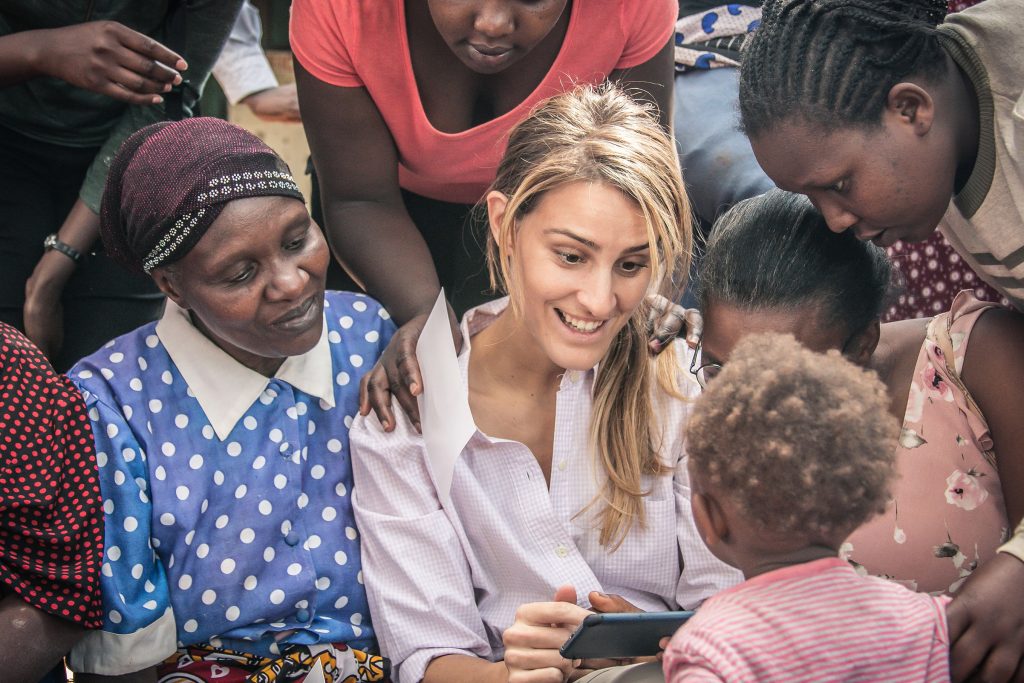
Lucrezia Bisignani is Co-Founder and CEO of Kukua; a start-up company leveraging new media and technology to empower children to learn through engaging experiences. Kukua has a dedicated team of entrepreneurs, game designers, cognitive psychologists and educational experts fuelled by the research that shows how acquiring even basic literacy and numeracy can change a child’s entire life trajectory. Last November, Kukua was selected as the winner of the Liquid Launchpad competition at Africacom, beating off competition from four other start-ups to receive a six-month fixed membership at the MEST Incubator in Cape Town.
“Three years ago, we set out to design an app that could address the illiteracy crisis amongst children in sub-Saharan Africa. With the arrival of more affordable smartphones and tablets, we saw an opportunity to support children who had not developed basic reading, writing and maths skills, which are fundamental to the rest of the education path.
We brought together world literacy experts to develop the methodology for the app, and then created 30 games around this methodology. We also created a narrative of locally inspired characters and scenery that kids could truly resonate with.
We spent over two years finalising the design and production of the app. Even though production was completed at a design studio in Italy, we constantly tested the app with kids in slums, refugee camps and impoverished areas of Africa. Overall, 3000 kids tested the app and we made 500 iterations based on their feedback.
Kids were not engaged with the app content to begin with. But by the end, we had increased engagement and created a sticky product that kids spend a lot of time on – and, most importantly, which improved their literacy outcomes. One important lesson we learnt during this process was that the design of the user interface had to be very simple. It had to be designed so that a child who had never used a phone before could navigate the application without the help of an adult. For example, we’ve seen other education apps where kids got stuck at the log-in stage – so we designed our log-in to be a selfie, which is simple and all kids know how to take.
It took a lot of testing to get to where we are now, and then we were faced with the distribution challenge – how do we get the app into the hands of as many kids who need it as possible? There are two ways we are doing this. The first is by partnering with governments and NGOs to ensure that our app is uploaded to the tablets that they are providing to children in schools. The second is to target families where parents can let the kids use the app at home in their spare time. In the space of two months, we had 3000 downloads from word of mouth and some excellent metrics on stickiness and engagement – kids were on average using the app three times a week with average of 30 minutes per session.
Moving forward, we’ve realised that it is very difficult to create a sustainable business in the education sector and so we’re adopting a new innovative approach to our business model. We are writing an animated TV series centred on the main character in our app – a courageous African girl called Sema. We’ve already hired screenwriters and producers, and we really feel this will be an effective way to both raise our profile and expand our revenue channels. It is a long-term vision that will take us many years to achieve, but we have a lot of patience and passion – we believe we can combine education products that change lives with innovative entertainment.
I think game-based learning will have a big role to play at primary school level, where games are the best way for kids aged 5 to 8 to use their imagination and creativity. There are so many studies now that demonstrate that gaming can increase learning outcomes, and we’ve already seen a lot of changes in three years. Everyone now wants to use technology more in schools and the education field.
Kids in Africa are now growing up with technology for the first time. If they can see how technology can be inspiring, creative and change lives then they will want to be involved.”